Everything You Need To Know About a Green Card
Everything You Need To Know About a Green Card
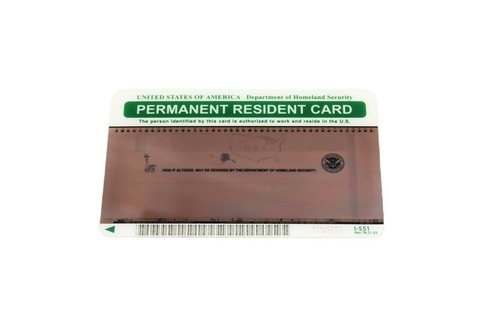
If you're a foreign national looking to live and work in the United States permanently, you're probably already familiar with the green card. Also known as the Permanent Resident Card, a green card is a document that provides legal proof of a foreign national's status as a permanent resident of the United States. In this article, we'll explore everything you need to know about a green card, from its benefits and requirements to the application process and renewal.
What Is a Green Card?
A green card is a document that shows that a foreign national has been granted the right to live and work permanently in the United States. By having a green card, an individual becomes a lawful permanent resident (LPR) of the United States and can enjoy many of the same rights and protections as a U.S. citizen.
There are two types of green cards: family-based and employment-based. Family-based green cards are issued to foreign nationals who have a close family member who is a U.S. citizen or lawful permanent resident. Employment-based green cards are issued to foreign nationals who have a job offer in the United States or who possess certain specialized skills.
Both types of green cards are valid for 10 years, after which they must be renewed. However, the holder of a green card can apply for U.S. citizenship after five years of permanent residency (or three years if married to a U.S. citizen).
Benefits of a Green Card
There are several benefits to having a green card, including:
1. Work Authorization: With a green card, you are authorized to work legally in the United States. You can work for any employer and change jobs as you wish.
2. Social Security and Medicare: You can apply for Social Security and Medicare benefits after meeting certain eligibility requirements.
3. Travel: You can travel outside of the United States and re-enter freely as long as you maintain your permanent residency status.
4. Education: As a permanent resident, you can attend any public or private school in the United States and pay the same tuition rates as U.S. citizens.
5. Protection: As a green card holder, you are protected by U.S. laws, including the same legal protections as U.S. citizens.
Requirements for a Green Card
To be eligible for a green card, you must meet certain requirements. The most common requirements include:
1. Family-Based Green Card: If you are seeking a family-based green card, you must have a close relative who is a U.S. citizen or lawful permanent resident who is willing to sponsor you. You must also prove your relationship to that person.
2. Employment-Based Green Card: If you are seeking an employment-based green card, you must have a job offer in the United States, and your employer must demonstrate that there are no qualified U.S. workers available to fill the position.
3. Diversity Visa: Every year, the U.S. Department of State holds a Diversity Immigrant Visa Program, also known as the Green Card Lottery. The lottery provides a random opportunity for individuals from countries with low rates of immigration to the United States to obtain a green card.
4. Refugee or Asylum Status: If you have been granted refugee or asylum status in the United States, you may be eligible for a green card after one year.
5. Special Programs: There are several special programs that may lead to a green card, such as the Cuban Adjustment Act, the Haitian Refugee Immigration Fairness Act, and the Nicaraguan Adjustment and Central American Relief Act.
📝 See Also
Application Process for a Green Card
The application process for a green card can be complex and time-consuming. Here are the basic steps you need to follow:
1. Determine your eligibility for a green card based on the requirements listed above.
2. Obtain an immigrant visa number: Before you can apply for a green card, you must first obtain an immigrant visa number. The process for obtaining an immigrant visa number varies depending on the type of green card you are seeking.
3. File a petition: If you are seeking a family-based green card, your relative who is a U.S. citizen or lawful permanent resident must file a petition on your behalf. If you are seeking an employment-based green card, your employer must file a petition on your behalf.
4. Complete and submit the necessary forms: Depending on the type of green card you are seeking, you may need to complete several different forms. Be sure to read the instructions carefully and provide all requested information.
5. Submit supporting documents: When applying for a green card, you must provide a variety of supporting documents, such as your birth certificate, passport, marriage certificate (if applicable), and police clearance certificate.
6. Attend an interview: After you've filed your application and submitted all required documents, you may be required to attend an in-person interview with a USCIS officer.
7. Wait for a decision: After your interview, you'll need to wait for a decision from USCIS regarding your application. If your application is approved, you'll be issued a green card.
Renewing Your Green Card
Green cards are valid for 10 years and must be renewed before they expire. The renewal process involves completing a form and submitting it to USCIS along with the appropriate fee. You may also be required to submit supporting documents, such as a copy of your expiring green card, passport, and a recent photograph.
If you've been outside of the United States for more than 180 days during the past 10 years, you may need to prove that you did not abandon your permanent residency status by submitting additional documentation.
Conclusion
The green card is a valuable document that provides foreign nationals with an opportunity to live and work permanently in the United States. While the application process can be overwhelming, understanding the requirements and following the steps outlined above can help simplify the process. If you're interested in obtaining a green card, consider speaking with an immigration attorney who can guide you through the process and help you determine the best type of green card for your situation.
What is a Green Card?
A Green Card is a formal legal document that permits a non-citizen to reside within the United States on a permanent basis.
During this permanent residency, theholder of the Green Card is entitled to be gainfully employed while residing legally in the United States.
A Green Card is common, which is also known as a Permanent Residency Card, requires the fulfillment of various obligations regulated by the United States Immigration Services.
There are a few distinct ways to obtain a green card, the most common of which are achieved through one’s employer, through marriage, or through educational and government programs.
Steps to Obtain a Green Card
Green Cards through an Employer:
A non-citizen of the United States can obtain permanent residency through sponsorship offered by their respective employer.
When an applicant receives sponsorship, their employer is in essence, vouching for the character, ability, and liability of the applicant in question. In order to obtain sponsorship, the applicant will be required to submit the following documentation and forms:
1. The applicant is required to file a Labor Certification Application. A variety of these forms can be accessed through the United States Department of Labor. The forms will vary depending on the nature of the applicant’s employment.
2. The applicant is also required to file Form ETA-750. This document is the application for Alien Employment Certification, which is a standard requirement for all non-citizens requesting permission to be employed in the United States.
Green Cards through marriage:
When a non-resident marries a citizen of the United States, the non-citizen can apply for a Green card subsequent to the marriage. To complete the process, the non-resident must fulfill the following requirements:
1. The applicant must file the Form I-485, which is an application to adjust the status of residency from temporary to permanency.
2. Additionally, an individual is required to complete a K-1 form, which is a form that substantiates that the fiancé plans on legally marrying a United States citizen and plans to enter America to do so.
3. The G-325A form must also be completed; this form provides official documentation, and records the non-citizen’s biographical information with the Immigration department’s database. The G-325A form must be completed prior to satisfying the Green Card application process.
4. Lastly, the I-130 form must be completed, which is a petition for a non-citizen to enter the United States by means of legal and lawful marriage.
Legal Assistance associated with the obtainment of a Green Card
In the event that an applicant experiences difficulty while undergoing the Green Card process there are a variety of resources and avenues that can offer assistance:
1. The United States Citizenship and Immigration Services Bureau can be contacted through their toll-free phone number: (800) 375-5283. This service will provide additional information to elucidate on the applicant process. The representatives at the Bureau will offer information concerningadditional requirements, the expedition of applications, citizenship requirements, and supplemental immigration legislation are encouraged to:
Arrange an appointment with an Immigration Case Worker through the InfoPass program, which is the online interview and appointment portal located on the USCIS website
Request information – both in digital or hard-copy form – from the USCIS documentation and resource database
2. If the applicant is still confused over the application process it is highly recommended that the individual seek the aid of an Immigration Attorney. These legal professionals can be instrumental throughout the application process with regard to a Green Card. Immigration attorneys are well-versed in immigration legislation, form requirements, stipulations, and conditions applicable to the attainment of approval for the expressed permission of legal entry into the United States.Immigration attorneys will streamline the application process by advising their respective client(s) through the arrangement of paperwork, investigating immigration status, and ensuring the legality of all immigration-based activity and requests.